
It is not lost on me that this is a massive topic to try to address in one blog post, but it’s a source of conflict that I want to address. For a variety of reasons, certain people in this world take issue with trans folks competing in various sports. I will address the primary concerns throughout this entry, but first, I want to make a distinction between recreational sports and competitive sports.
Recreational sports are a pleasure that should be available to everyone. These sports encourage an active lifestyle and the primary intent is to have fun, meaning risk factors are low and regulations are minimal. I created a video about how I got back into recreational sports after transitioning.
The primary concerns around trans people competing relate to perceived advantages in size, strength, speed, lung capacity, weight, etc. As long as sports continue to be segregated by gender, these factors have to be taken into consideration, as do the effects of hormones on trans people’s bodies. Since the concerns pertain to high level of sport, this entry will not focus on recreational sports.
In professional sports, regulating bodies decide who is allowed to compete against who. In some sports, this is determined by weight, but gender is almost always a dividing line. In an attempt to create a level playing field, regulators try to draw a line between men and women. This is not an easy line to draw, since our world is not as binary as some people would have us believe.
You may ask why humans are not segregated based on another metric, and that’s a valid question. Perhaps it would make more sense to separate competitors by height, or weight, or some other physical characteristic. This entry will centre the experience of competing in gendered sport, since that is the current normalized standard.
For the purposes of high-level gendered sports, do we incorporate trans people and, if so, how? The answer to this question is seemingly obvious – trans women are women and should compete with women, and trans men are men and should compete with men. Now, this is where the concerns start being raised.
This could turn into a huge conversation around how to address non-binary individuals but, again, this entry is focused on the experience of competing in gendered sport, so that is an important topic best left for its own entry. It is, however, important to remember, throughout reading this, that intersex people exist and can be similarly affected by regulations that seek to separate competitors by gender.
The concerns, at this point, are related to not wanting trans people to compete in high-level gendered sports. Why is the option of excluding trans people not on the table? Simple. Sports are segregated by gender, and everyone should have the right to compete without having to modify their identity. The only other option would be to place trans people in the same category of sport as folks with disabilities, but that wouldn’t make sense, because being transgender is not a disability. So, how do we separate the good-faith concerns from the constant stream of transphobia and address those? Well, it’s certainly not easy, but this will be one attempt.
Let’s begin by acknowledging that not all trans people have been through multiple puberties. Some trans people receive puberty blockers that can give them the opportunity to go through only the puberty that they are comfortable with, and which will prevent their body from developing in ways that could be perceived as advantageous, as compared to cis people of the same gender, who they may be competing against.
Assuming a trans person has gone through multiple puberties on the way to playing high-level gendered sports, they may or may not have developed physical attributes which could be perceived as advantageous and somehow different from the equivalent physical attributes of their cis counterparts. Typically, the concerns raised are with regard to trans women seeming to have an advantage over cis women. This brings us back to the specific concerns mentioned at the beginning of this entry.
Height:
Whether or not height is an advantage, a disadvantage or neutral depends on the sport in question. It is not fair to say that an athlete who is taller is, by extension, a better athlete. Regulations around size have to be considered on a sport-by-sport basis, however, height is not an indication of gender. Trans women can be short, trans men can be tall, cis women can be tall and cis men can be short.
Strength:
Often, strength is an advantage in sport, however, it is very difficult to draw a line between ‘acceptable’ strength for a woman as compared to ‘acceptable’ strength for a man because, as always, humans are not binary. Regulations to accomplish this will generally relate to testosterone levels. The goal of these regulations is to ensure trans people medically transition to the point that their hormone levels are equivalent to those of their cis counterparts, for long enough that potential muscular advantages no longer exist.
Speed:
Speed is another component which results in an advantage in many sports. Like strength, it’s difficult to draw a line between ‘acceptable’ for men vs ‘acceptable’ for women. As with strength, regulations will typically focus on testosterone levels to address this. The recorded difference in speed between trans women and trans men is roughly 11%, meaning regulations will attempt to ensure trans women have medically transitioned to the point of seeing an 11% reduction in average speed and trans men have seen an 11% increase.
Other concerns relate to lung capacity, weight, hip size, chest size, etc, but as with everything else mentioned, these are all variables which exist among cis people as well. The goal of competitive sport has never been to separate people based on every possible physical characteristic, otherwise we would only be competing against ourselves.
As long as sports are segregated by gender, there will always be inequality. In fact, the whole premise behind sport and competition is that it is a method of proving yourself to be better than others at something, and therefore not equal. Creating a fairly level metaphorical playing field is how regulating bodies are able to create the illusion that hard work is all it takes to be a great athlete in your field. As long as regulating bodies are trying to create the illusion of fairness, it is in their best interest, as well as the best interest of both cis and trans competitors, to figure out how to incorporate trans people. If regulations favour trans women, for instance, trans men won’t be able to compete and cis women will suffer.
At this point, trans people are enormously underrepresented in all sports, but particularly in high-level sports. Since the Olympics are a worldwide coming together of high-level gendered sports, their stance on trans people is often examined more closely than other organizations and this entry will be no different, since the aim is to address widespread concerns.
While the ‘experts’ work to determine how to ‘fairly’ separate the population into two quadrants, it’s important to note that the overwhelming majority of people competing in, and winning, competitions are cis, even when accounting for the difference in population sizes between cis and trans people.
Statistics are one of the best tools we have for determining the effectiveness of regulations related to trans people in sports. Statistics will tell us if an expected number of trans people are competing in sports, if they’re divided fairly evenly between the men’s and women’s categories and if an expected number are winning events. This will help regulators, and the rest of society, determine if the regulations are working as expected or if they have to be modified to be more lenient or more strict.,
Consider this – A conservative estimate is that 0.6% of the population is trans. Trans people have been allowed in the Olympics since 2004, but no trans people are known to have competed since then. 14,000 people competed in the 2016 & 2018 olympics (since the IOC reduced the requirements for trans people to compete), and still no known trans people participated. Based on 14,000 people competing, and the 0.6% estimated trans population, there should have been 84 trans people competing, but there weren’t. 410 gold medals were handed out in 2016 & 2018 Olympics. Based on that 0.6% estimate, 2-3 trans people should have won an event, but that didn’t happen.
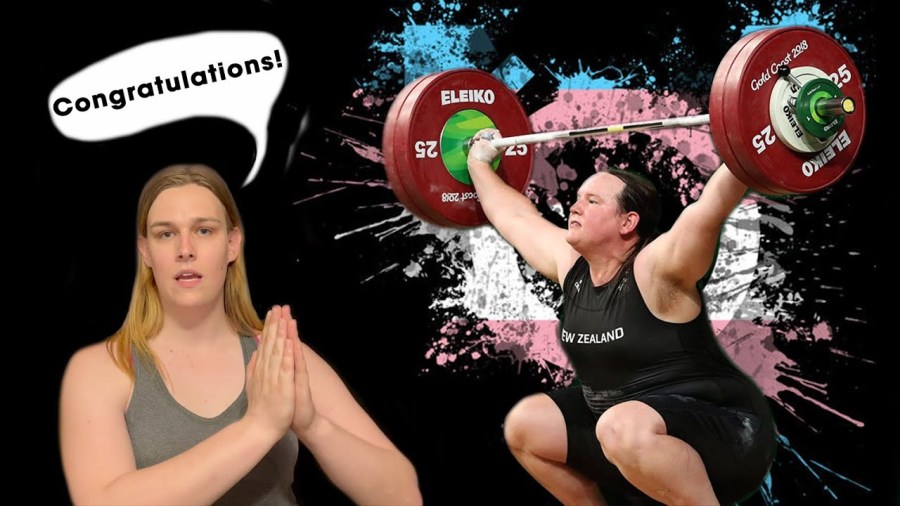
It is for this reason that I created a video congratulating the first trans person to qualify for the Olympics. The odds were stacked against her, she has been facing an incredible amount of hate and, by extension, my video received a lot of hate as well (but I stand by it). Laurel Hubbard did not cheat anyone out of a position. She worked within the regulations outlined by the IOC to make history. She did not steal this position from anyone any more than any other woman who qualified for the Olympics.
Concerns are often hypothetical and presented in a manner that makes it obvious the person raising concerns doesn’t actually view trans people as the gender they identify with and are not asking in good faith. I’m dismissive of many “concerns” for that reason, but I hope this blog post has given you some insight and, if you are one of those people with good-faith concerns, I hope this alleviated them for you.


 nicsnews.ca